

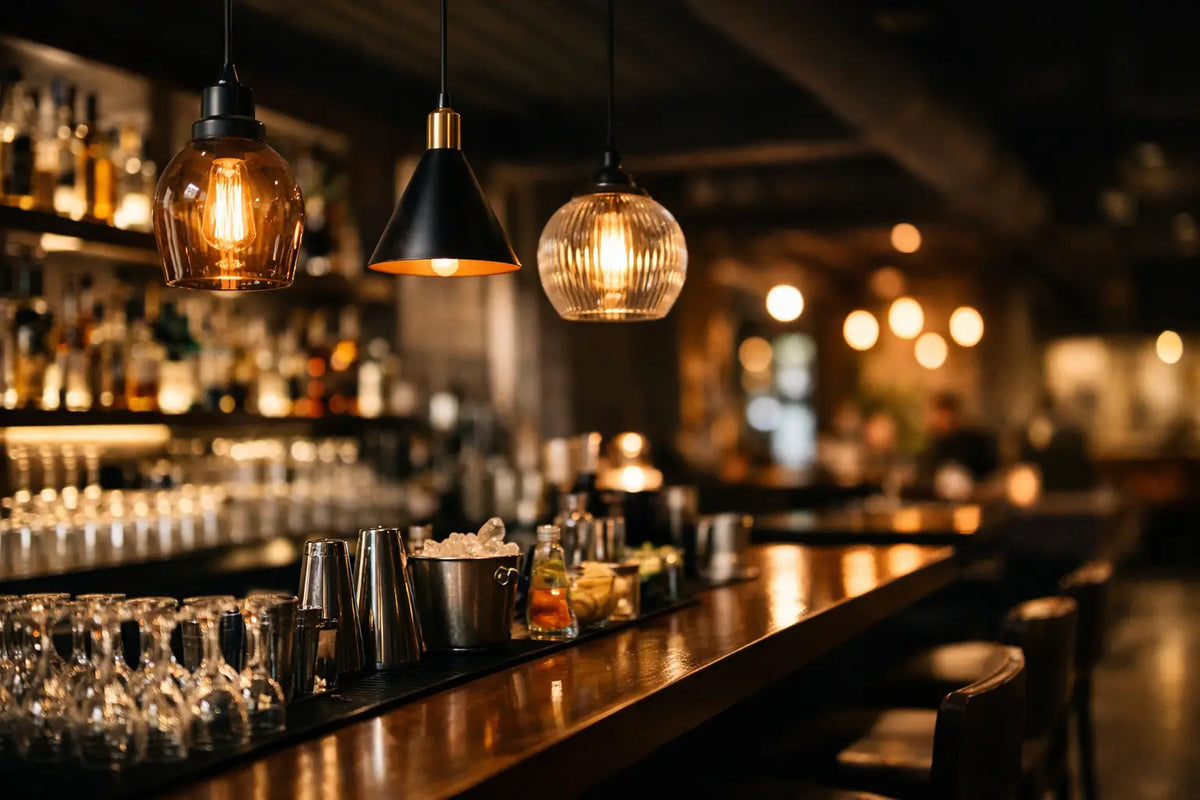
A guest enters, assesses the atmosphere within seconds, and decides whether to order another drink or move on. Before even reading the menu, they perceive the light. That's why the question of how to choose lighting for a bar isn't just a technical detail during renovation. It's a decision that affects guest photos, the length of their visit, the readability of the menu, and the strength of your brand.
A bar shouldn't be perfectly bright. It should be legible, comfortable, and memorable. Well-designed lighting guides the eyes to the bar, highlights materials, flatters people, and creates a scene guests want to return to. Poorly chosen lighting, on the other hand, can turn even a beautiful interior into a cold waiting room or an impractical, dark space.
Start with the Atmosphere, Not a Lighting Catalogue
Before selecting lamps, define the feeling you want your establishment to evoke. A cocktail bar with subdued music requires a different lighting approach than a sports bar, a hotel lobby bar, or a lively bistro with evening operations. A single central light for the entire space usually doesn't work in any case.
Imagine a guest's typical journey: street, entrance, seating, ordering, taking a photo of a drink, visiting the restroom, and leaving. Each of these moments requires a slightly different lighting mood. The entrance must attract attention, the bar counter simplify orientation, seating offer privacy, and restrooms must not feel like an unexpectedly bright escape from the atmosphere.
A good solution works in layers. Basic lighting allows for safe movement and comfortable work for staff. Accent lighting highlights shelves of bottles, wall textures, paintings, or distinctive materials. The decorative layer then gives the space its signature – for example, pendant lights, a glowing logo, or an LED neon sign.
How to Choose Bar Lighting by Zones
The most common mistake is to choose one type of light fixture and arrange it regularly across the ceiling. But a bar is not an office. Guests need a different reason to feel good in each part of the space.
The Bar Counter Must Be the Main Stage
The counter is the center of activity. Lighting here should support the bartender's work, showcase the colors of drinks, and at the same time entice guests to order. A combination of task lighting under the upper shelves and a more prominent decorative element above the counter works well. Pendant lights can create rhythm, but don't hang them too low – guests and staff shouldn't have to duck under them.
Shelves with bottles benefit from indirect LED backlighting. Glass, labels, and colorful liquids gain depth without the light dazzling people sitting opposite. At an open bar, also consider reflections in mirrors and shiny counter surfaces. A light source shining directly into a guest's eyes will detract from the comfort of even the best interior.
Seating Needs Intimacy and Orientation
At tables, the goal is not to illuminate every corner. Guests want to see the menu, the face of the other person, and the bill. But they don't have to feel like they are under an interrogation lamp. Lower-hanging lights above selected tables, wall lamps, or small portable LED table lamps create pleasant islands of light.
Cordless lamps are practical, especially where the layout changes frequently or where you don't want to interfere with existing furniture. Pay attention to their battery life, easy charging, and stability. During busy Friday operations, staff shouldn't be forced to search for charging cables between orders.
Hallways, Restrooms, and Entrance Must Not Be Overlooked
It is precisely these secondary zones that determine whether the space feels well thought out. A hallway should safely guide the guest, not dazzle them. Restrooms can have brighter, cleaner light, but should still align with the bar's aesthetic. The entrance, in turn, needs contrast with the street. In the evening, a backlit sign, a light-up logo, or a neon motif often serves as an invitation and a natural spot for a photo.
Light Temperature Changes Materials and Mood
Color temperature is measured in Kelvins and plays a surprisingly large role in a bar. Warm light around 2200 to 2700 K gives wood, leather, brass, and dark colors a softer, more luxurious expression. It is suitable for speakeasy bars, wine bars, and spaces where the evening should flow more slowly.
More neutral light around 3000 K is a more versatile choice for modern bars, bistros, and cafes with all-day operation. It better shows the colors of food and menu details, without appearing sterile. Use cooler shades above 4000 K sparingly, typically only in back-of-house areas or where you intentionally want to create an industrial or club effect.
It's not necessary to keep the entire establishment at a single temperature. On the contrary, a warm space for guests and a slightly more neutral working zone behind the bar is a logical combination. The condition is that the difference does not appear random. The lighting should have a clear concept, just like the music, menu, or materials on the walls.
Colors, Dimming, and the Evening Transformation of the Space
Colored RGB light is a powerful tool, but not an automatic path to atmosphere. If every surface glows a different color, the interior loses character and guests may look unnatural in photos. Therefore, use colored light as an accent: behind bottles, under a bench, on one wall, or in the form of a prominent neon element.
Dimming often makes a much bigger difference than RGB. A bar can function as a fresh cafe in the morning, a meeting place in the afternoon, and an intimate spot for a drink in the evening. Without the ability to adjust light intensity, you lose out on this transformation. Ideally, divide control at least for the bar, seating, decorative elements, and communication areas.
Also consider automatic scenarios for opening hours. This isn't about effect for effect's sake. Staff will have a consistent atmosphere without daily adjustments, and guests will experience the same character of the establishment whether they come on a Tuesday or a Saturday.
Don't Forget Color Quality and Eye Comfort
Bar lighting often only considers wattage or shade design. However, faithful color rendering is also important for a true result. Look for luminaires with a high color rendering index, ideally CRI 90 and above, especially above the bar and where food is served. A red cocktail, citrus peel, and skin tone will then look vibrant, not grayish.
Equally important is glare reduction. An exposed decorative bulb can be beautiful, provided it's not directly in the guest's line of sight. In low spaces or above benches, shades, opal diffusers, wall-mounted fixtures, and indirect LED strips often work better. The design should be visible, but it shouldn't hurt the eyes.
Don't underestimate the practical side even in back-of-house areas. For fixtures near a sink, dishwasher, ice machine, or outdoor garden, ensure appropriate protection against moisture and dust. An energy-efficient light source with a long lifespan makes sense, but only if it's easy to service and its light matches the establishment's concept.
Lighting Identity is More Than a Logo on the Wall
Guests often don't remember the exact shade of the floor tiles. However, they do remember the illuminated sign above the bar, the symbol in the window, or the wall where they took a photo. Lighting branding is therefore not just an extra decoration. It's a point that connects atmosphere, social media sharing, and brand memorability.
A neon sign can bear the name of the establishment, a short phrase, a menu motif, or an original graphic symbol. It doesn't have to scream. In an elegant bar, it can glow softly in warm white; in a music venue, it can use color and more striking typography. The crucial factor is placement: the element must be visible, but it must not compete with the entire interior.
If you are looking for a tailored solution, AtmoSvetla can transform an idea, logo, or graphic into a lighting element, including a free design and consultation. This allows for the integration of functional lighting with a visual signature that does not appear as an afterthought advertisement.
First, Have the Space "Read" at Night
Before ordering lights, stand in the bar after dark. Take photos of problematic areas, walk the guest's path, and observe where the eye naturally stops. Only then choose specific lamps, power, and decorative elements. Visualization is useful, but actual evening operation will reveal reflections, dark corners, and places where a queue will form.
Lighting in a bar should not be just another budget item. It should provide a better backdrop for every drink, a clear feeling for every visit, and a reason for your brand to stay in guests' minds long after closing time.