

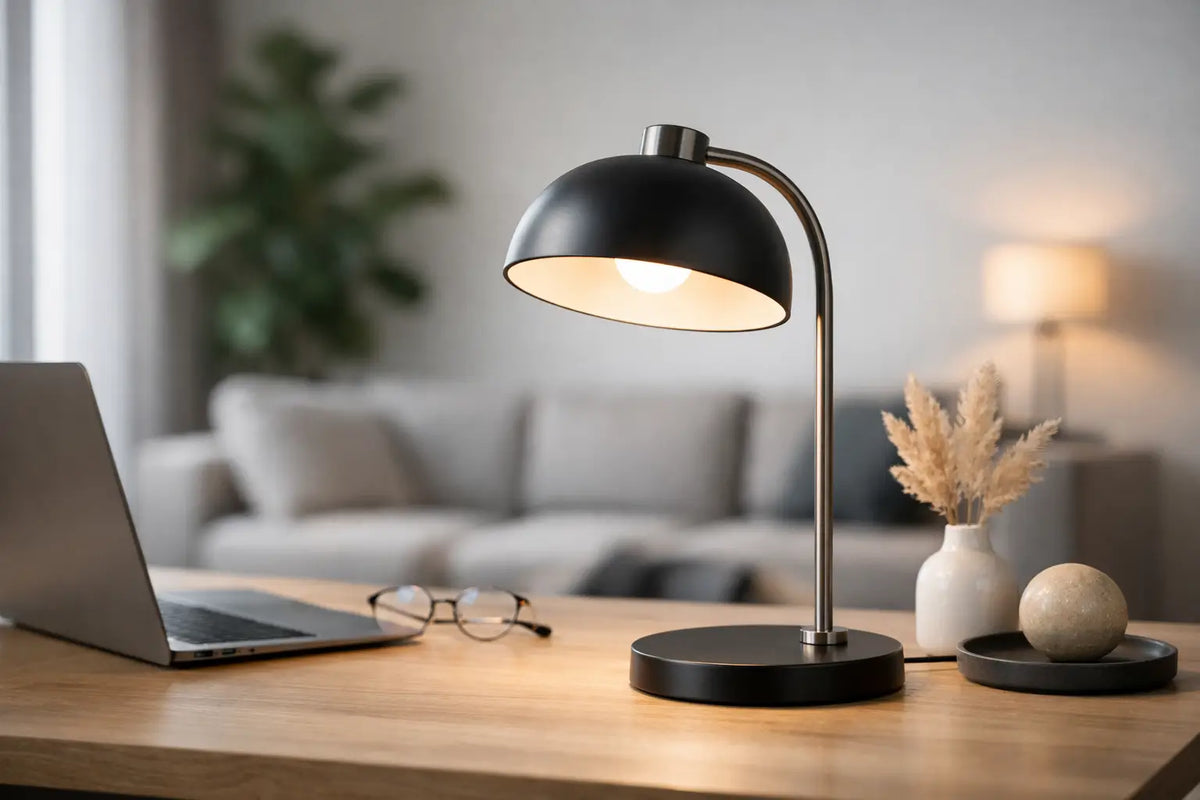
When something isn't working in a modern interior, it's often not the sofa or the wall color. It's the lighting. A table lamp in a modern interior can either complete the space down to the last detail or visually disrupt it. On a small footprint, it combines function, atmosphere, and a stylistic statement – and that's precisely why it deserves more attention than just a quick pick based on a photo.
A modern interior today isn't about everything looking cold, sleek, and uniform. It's about balancing clean lines with personality. A table lamp doesn't just serve as an auxiliary light source. It can create a more intimate evening scene, make a workspace cozier, emphasize materials, and add depth to a space. And this is where it's decided whether the lamp will simply sit on a table or truly transform the atmosphere.
How to Choose a Table Lamp for a Modern Interior
The first mistake is often simple – people choose a lamp in isolation. They like the shape, finish, or color, but they don't consider what surrounds it. However, a modern interior is sensitive to proportions. A massive ceramic lamp will look heavy on a subtle console. Conversely, a tiny lamp next to a low sofa will get lost and lose its purpose.
Therefore, size in the context of the space is crucial. A lower model that doesn't obstruct the view or glare is usually suitable for a bedside table. In the living room next to a sofa or on a chest of drawers, you can afford a more distinctive volume and a larger shade. In a workspace, directionality and comfort of use play the main role.
The second thing is the character of the light. If you're looking for a lamp for an evening atmosphere, you need softer, diffused lighting. For reading or working, more targeted light and a more practical shape are better. One lamp usually can't perfectly fulfill both roles. And this is where choosing by purpose is smarter than choosing by trend.
The Style of a Modern Interior Is Not Just One
Everyone imagines something different under the term "modern." Some envision pure minimalism in black and white, others a warm contemporary style with wood, textures, and beige tones. Therefore, there isn't one universal table lamp for a modern interior. There is only the right lamp for a specific type of space.
In a minimalist interior, simple geometric shapes, metal, glass, or matte finishes work well. The lamp should be precise, clean, and without unnecessary ornaments. If it's meant to be a dominant feature, let it be dominant in its shape. If it's meant to blend in, let it maintain a calm visual line.
In a softer modern space, you can afford more warmth. Opal glass, a beige textile shade, smoky tones, or a combination of black with brass work wonderfully. Here, the lamp doesn't just appear technical, but as an element that softens the space and gives it an evening mood.
Contrasts also work very well today. A sleek interior needs something to disrupt it. Therefore, a lamp with a sculptural shape, an organic silhouette, or a distinctive base can be an interesting choice. But it must maintain discipline. If the lamp is already distinctive, the surroundings should remain calmer.
Materials That Really Work in a Modern Space
Modern interiors are compatible with metal, glass, ceramics, and quality acrylic. However, each material sends a slightly different signal. Metal appears more precise and technical, glass lighter and more elegant, ceramics bring more mass and softness. Acrylic or transparent elements can be an excellent choice where you don't want to visually burden the space.
The surface finish also matters a lot. Gloss can be effective, but it shows fingerprints and can appear too harsh in some interiors. Matte tends to be more versatile and easier to combine. If you want timelessness, black, white, sand, gray, or smoky shades are a safer choice than seasonal colors.
Where the Lamp Will Stand Changes Everything
The same model can look great on a bedside table and completely wrong on a chest of drawers. Placement is not a detail, but the basis of selection. For a bedside table, compactness, pleasant light, and easy operation are key. In the living room, the decorative effect and continuity with the rest of the furnishings are more important. In the study, on the other hand, less is forgiven - there, the lamp must work every day.
If the lamp stands on a console table in the hallway or living room, it often primarily fulfills a scenic role. It illuminates a corner, highlights a painting, a vase, or the wall texture. In such a case, it's not necessary to push for maximum output. Much more important is how the light appears after dark and how the lamp looks even when turned off.
On a desk, the situation is different. Here, it doesn't pay to sacrifice ergonomics for design. A stylish lamp that glares, takes up half the table, or cannot be directed properly will be more of a frustration than a joy after a week. A modern interior can handle even a more practical lamp, provided it has a clean shape and quality workmanship.
Light Temperature and Intensity Determine the Atmosphere
People often consider the color of the lamp but forget about the color of the light. Yet, it is precisely this that determines whether a room feels cozy, neutral, or too stark. Warmer light, which softens the space, is more pleasant for living rooms and bedrooms. A more neutral tone is suitable for work zones, as it promotes concentration and more accurate color perception.
The ability to adjust intensity is a great advantage. In a modern interior, you rarely want one constant light output. In the evening, you need calm; for reading, more light; for guests, pleasant background illumination. A dimmable table lamp thus gives the space greater flexibility and appears more sophisticated than an on/off solution.
If you want to build an interior truly consciously, think of a table lamp as part of a lighting composition. It shouldn't compete with the main ceiling fixture but complement it. The most beautiful spaces are not over-lit by a single source. They have layers. And table lamps often create the layer that makes a house a home.
A Table Lamp for a Modern Interior as a Statement Piece
Sometimes a lamp should blend in, other times it should attract attention. Both are correct if you know why. A statement lamp works great in a simpler space where you need one strong accent. This could be an unusual shape, a distinctive color, an original base, or an interesting interplay of transparency and light.
Such a choice, however, requires certainty. If you already have a dominant painting, a textured wall, a designer armchair, and several striking decorations in the room, another solitaire can seem cluttered. A modern interior is not based on a multitude of effective elements, but on their relationship. A strong lamp has the greatest impact where it is given space to stand out.
This is precisely what makes light interesting - it's not just an object, but a visual experience when lit. With a brand like AtmoSvetla, this perspective is natural. A luminaire should not just be a technical piece of equipment, but part of the atmosphere that gives the space identity.
What Mistakes to Watch Out For When Choosing
The most common mistake is buying based on a photo without checking dimensions. The second is underestimating the type of light. The third is trying to match everything into one set. A modern interior doesn't need the lamp to copy every color in the room. A thoughtful connection to one or two elements - such as metal details, the color of furniture legs, or the material of decorations - works much better.
Also, be careful with overly cool light in living areas. A lamp may look great in an e-shop, but harsh light will then destroy all coziness. Likewise, it's good to pay attention to the cable, switch, and overall workmanship. With a table lamp, these details are more visible than with a ceiling fixture, and therefore quickly reveal the difference between a well-thought-out product and a compromise.
It also pays to think ahead. If you plan to change the layout or add new accessories in six months, choose a model that has a chance to stand the test of time even after a minor interior transformation. Timelessness is not boring. It is the luminaire's ability to maintain style even when something around it changes.
A well-chosen table lamp is not a small item for a side table. It is a point that sets the mood in the evening, completes the composition during the day, and long-term influences how you feel at home. When you choose it according to the space, light, and character of the room, you are not just acquiring a lamp. You are illuminating your interior so that it has its own signature.