

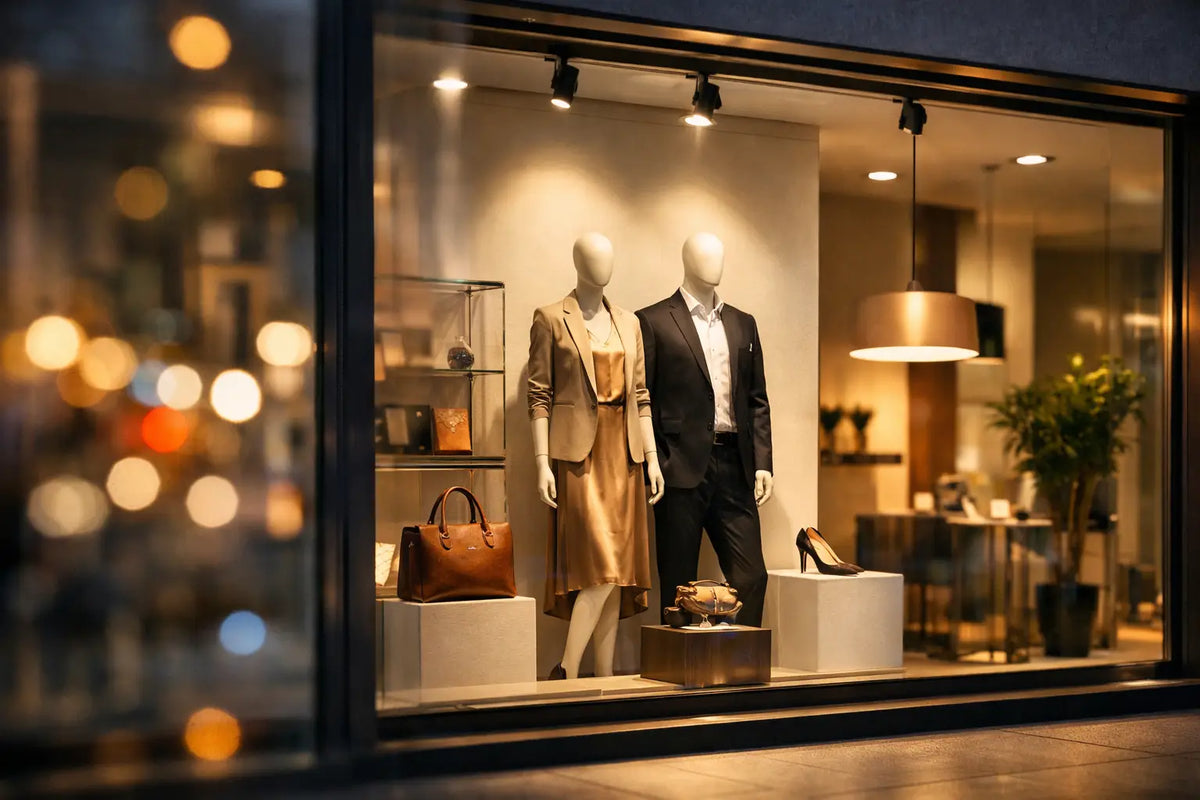
A storefront often has only a few seconds to stop a passerby. That is precisely why the question of how to light a business storefront is not just a technical detail, but a direct factor in how many people notice your establishment, how many walk inside, and how well they remember you. Well-designed lighting does not just show products. It creates atmosphere, supports the brand, and gives the space a clear character from the sidewalk.
The most common mistake is simple—the storefront has either too little light or too much. In the first case, the space fades away; in the second, it feels harsh, cheap, and tiring to the eyes. A functional storefront is not about lighting everything up to the maximum. It is about guiding the eye to where you want to be seen.
How to light a business storefront with a clear goal
Before choosing light fixtures, you need to clarify what the storefront is supposed to do. Lighting a boutique with one hero product is different from lighting a café that wants to feel cozy in the evening, or a salon where elegance and cleanliness are the main goals. Light is not just an extra decoration. It is a tool that directs attention.
If the storefront is meant to sell specific goods, the main product must be the strongest point of the entire composition. If it is meant to build a brand, a striking lighting element—a logo, a neon sign, or a backlit claim—often works well. And if it is meant to attract people inside through atmosphere, you need a combination of window lighting and pleasant interior light so that the space does not feel like a separate stage set.
The first decision, therefore, is not about how powerful a bulb to buy, but what the person should see first.
The foundation of a storefront is light layering
A functional storefront relies on layering. One central lamp on the ceiling is not enough because the light falls flat and without hierarchy. The result is usually dull and lacks tension. A combination of ambient, accent, and branding light works much better.
Ambient light creates basic visibility for the space. It should not dazzle or overpower products, but ensure the storefront does not feel dark and dead. Accent light, on the other hand, highlights selected elements—a mannequin, a new product, a floral installation, a menu, or a seasonal collection. And branding light is what sets you apart. This could be a light-up logo, an LED sign, a backlit panel, or a subtle lighting detail that stays in one's head even after leaving.
This is where the difference is made between a storefront people pass by and a storefront people photograph.
Ambient light must be calm and clean
The base lighting should open up the space, not break it. In most storefronts, neutral to warmer white works best, depending on the type of business. For fashion, design, or gastro concepts, a warmer tone is usually more pleasant because it feels cozier and more natural. For opticians, showrooms, or modern salons, a neutral light that underscores cleanliness and precision may be better.
It is important to avoid patches, shadows, and overly sharp contrast. When one part of the storefront is blown out and another is buried in darkness, the eye does not know where to look. Instead of elegance, chaos is created.
Accent light sells what matters
Spotlights, track systems, or directional reflectors give the storefront rhythm. They allow you to highlight exactly what is key for a given period or campaign. A big advantage is flexibility—storefront layouts change, and the light should change with them.
An accent must be a true accent, however. If you light everything equally, you emphasize nothing. It is ideal to work with one main point and several supporting elements. The eye then naturally reads the scene from the most important detail onward.
Branding light makes the storefront a brand signature
Many establishments treat a storefront only as a place to display goods. Yet, the greatest power often comes when light also carries identity. A neon sign, a glowing logo, or an original light element can work even when the storefront is minimalist and not cluttered with products.
This is especially useful for cafes, bistros, salons, or concept stores, where people often react to the atmosphere before they react to the specific offer. The storefront then does not just say "we are open." It says "this is our style."
Light color matters more than it seems
When choosing lighting, output is often discussed, but the color of the light has a fundamental influence on how the storefront will be perceived. Warm light around 2700 to 3000 K creates a softer, welcoming, and stylish mood. It fits where you want to evoke a feeling of well-being, luxury, or a personal approach. Neutral white around 4000 K feels fresher, cleaner, and more factual.
Cold tones are a risk in a storefront. They can work in some modern establishments, but they easily slide into a feeling of sterility. Skin tones do not look good under them, materials lose depth, and the entire storefront can feel harsh. So, if you do not have a clear concept, it is safer to stick to the warmer or neutral spectrum.
Besides light temperature, watch the color rendering. Products must look true to life. This applies twice over to fashion, flowers, food, cosmetics, or design accessories. When red in a window looks dull and beige looks gray, you lose exactly the effect for which you are addressing lighting in the first place.
How to light a business storefront without common mistakes
The most damage is not caused by a lack of budget, but by poor decisions. One typical mistake is lighting aimed against the glass. This creates unpleasant reflections, and instead of the product, passersby see their own reflection or a mess of light. Fixtures should work with angles so that the storefront remains readable from the street and from different sides.
Another problem is overcrowding. When spotlights, LED strips, a light sign, blinking decorations, and intense interior light all meet in a storefront, the result is not striking—it is distracting. The storefront needs composition. Light is meant to highlight the scene, not fight with it.
Day and evening modes are also often underestimated. What looks good after dark can be nearly invisible during the day, and vice versa. Therefore, the storefront must work in both situations. Under bright sunlight, subtle details and low-intensity branding elements are lost. In the evening, atmosphere and contrast stand out more. An ideal solution accounts for both scenarios, not just one.
The storefront is not an isolated image, but part of the space
A strong storefront works best when it connects with the interior. If the storefront is perfectly lit but a cold, dark, or incongruous space awaits inside the establishment, the effect drops quickly. People subconsciously read the whole. They want to see that the atmosphere from outside continues inside as well.
That is why it makes sense to align the storefront with the tone of the main lighting, materials, and the brand's visual identity. A minimalist showroom requires a different light signature than a playful bistro or a romantic florist. It is not about having the most striking light on the street. It is about having light that is instantly yours.
This is where custom light signs or a custom logo can help significantly. When well-designed, they are not just advertising. They become part of the space's scenography and function as a landmark, a photo spot, or a natural brand signature. AtmoSvetla builds such solutions on the connection of aesthetics and commercial effect—so that light is not just seen, but has a reason to be there.
How much light is just right
There is no one universal answer to this question, as it depends on the size of the storefront, ambient lighting, type of assortment, and the street where the establishment is located. In a busy urban zone with other illuminated advertisements, you will need a different intensity than in a quieter location. Similarly, dark materials absorb more light than white or shiny surfaces.
A good rule is simple: the storefront must be readable, pleasant, and clearly guided. If a person does not know at first glance what you offer or what the main theme is, the lighting strategy is weak. If they have to squint, it is too aggressive.
It also pays to think about the operational side. LED solutions today make sense not only for consumption but also for longevity, stability, and options for working with intensity. However, even an economical light will not solve a bad concept. The scene must work first, the technology second.
When the storefront is meant to attract and fit the brand
The most successful business storefronts are not necessarily the largest or the most intensely lit. They are those that have a clear intent, good hierarchy, and their own atmosphere. Passersby may not know exactly why, but they feel that the space has energy, style, and a reason to walk inside.
So, if you are looking at how to give your establishment greater visibility, do not start just by picking a lamp. Start by asking how your brand should shine into the street at night. That is where the first real contact with the customer often begins.