

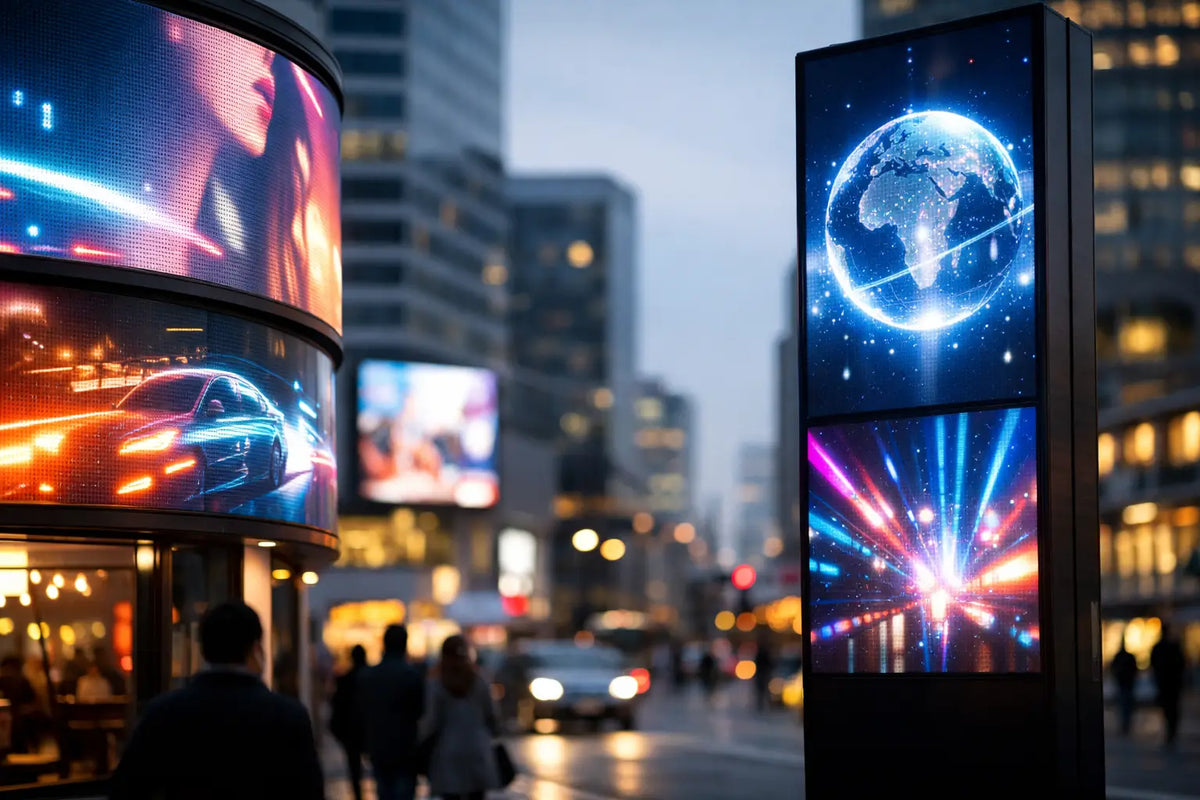
Guests will notice the illuminated sign even before they open the menu. Passers-by will take a photo in front of it, customers will use it to find the entrance to the studio, and the brand won't get lost among a row of similar storefronts. The future of LED advertising elements, therefore, isn't just about higher diode performance or more colors. It's about how well light expresses the character of a place and how easily it becomes part of the customer experience.
For a café, an LED sign can be the reason people walk in. In a salon, it creates a sense of care and style; in a shop, it draws attention to a new collection; and in an office, it gives a logo a weight that a regular wall plaque doesn't have. Illuminated advertising is shifting from a mere sign to an element that works with atmosphere, orientation, and memorability.
The future of LED advertising elements isn't just about brightness
Previously, it was often enough for an advertisement to simply shine brighter than its surroundings. But that's no longer automatically true. Streets, shopping centers, and online spaces are full of visual stimuli. Too sharp, rapidly flashing, or color-chaotic light might grab attention, but it doesn't necessarily build trust. And trust is precisely what determines whether people associate a brand with quality or just another distracting element.
The new generation of LED advertising elements will function less like a shout and more like a precisely chosen tone of voice. Warm white can enhance the coziness of a bistro, rich pink the energy of a beauty studio, and a clean white 3D logo technological precision. There's no universally "correct" color. What matters is the industry, interior, daylight, target audience, and the distance from which people will see the element.
This is good news for smaller businesses. Eye-catching advertising no longer has to mean a huge digital panel with high operating costs. Custom LED neon, a backlit 3D logo, or a combination of light and UV printing can create a strong identity even in a smaller format. More important than size is readability and an idea that matches the brand.
Light will be more responsive to space
The future doesn't mean every storefront will change color every second. A smarter lighting element can react subtly. During the day, it can shine with higher intensity, transition to a more pleasant mode in the evening, and highlight a specific message during a special event. Indoors, light can distinguish zones – the entrance, bar, photo booth, sales wall, or order pickup area.
This variability makes sense especially where operations change throughout the day. A morning café can feel calm, and an evening bar more energetic, without having to change the entire interior. For shops, it opens up space for seasonal communication, limited collections, or short campaigns. But it still holds true that technology should serve the concept, not replace it.
Too many effects can cheapen a brand. If a logo relies on elegance, a slow fade-in or a subtle color accent often does more than animations in all RGB shades. If the goal is to attract attention from a busy street, a more dynamic element might be appropriate. The right choice always starts with the question: What should a person feel and do when they see the light?
LED advertising as a backdrop for content and sharing
People today don't just photograph products. They photograph the environment in which they discovered them. A well-designed neon sign, a quote on the wall, or an illuminated symbol can become a natural spot for a photo and video. Not because the establishment has to chase every trend, but because customers enjoy sharing a visually strong place.
The most effective elements are those that are unique. A generic sign can adorn a space, but a custom slogan, drawing, logo, or detail linked to the business's story has a better chance of being remembered. For a bakery, it could be a playful motif; for a tattoo studio, a striking line; and for a showroom, a precisely lit brand signature. Here, light is not an extra decoration. It's part of what people tell stories about the place.
When designing, it's also good to consider the phone camera. Very fine lines may not be legible from a distance, overly bright light can overexpose colors in photos, and inappropriate placement can create shadows on faces. Future LED advertising elements will be created with the awareness that people will see them live, in videos, and as a small image on social media. One design must stand up to all these situations.
Custom manufacturing gains greater importance
Ready-made illuminated decorations have their place. They are a quick way to give an apartment, home bar, or business a more distinctive atmosphere. However, for a brand that wants to be truly recognizable, custom solutions will be increasingly valuable. Size, font type, backing, light shade, and mounting method all determine whether the element truly works in the space.
A custom order doesn't start with manufacturing, but with an idea and a brief consultation. It's necessary to know the wall, surrounding materials, available power supply, viewing distances, and whether the sign will be indoors, behind glass, or outdoors. Only then does it make sense to decide whether LED neon, a 3D logo, a light box, or a combined solution is more suitable.
This is where a free design proposal pays off, showing how the idea will look before actual production. AtmoSvetla transforms the customer's vision into a lighting solution so that it looks good both in the visualization and in the real space. A custom element isn't just about manufacturing a sign. It's about a decision that will be seen every day.
Materials, consumption, and lifespan will be part of the design
Illuminated advertising should be beautiful, but it must also stand up to everyday operation. The future belongs to solutions that make sense long-term: energy-efficient LED sources, quality workmanship, safe power supply, and the option to choose a design for a specific environment. An interior neon sign above a couch has different requirements than a logo on a facade exposed to rain, dust, and temperature changes.
Therefore, when choosing, it's not worth evaluating only the unit price. A cheaper element may have a weaker construction, an imprecise shade, unsuitable brightness, or a limited lifespan. Conversely, a well-made LED advertisement with a two-year warranty is an investment in daily visibility. Low consumption also allows the light to operate for long hours without an unpleasant impact on operating costs.
The importance of repairability and thoughtful design is also growing. A timeless logo in quality execution is not a one-time backdrop for a business opening. It can function for years, while seasonal decorations, offerings, or minor interior elements change around it. This is both more practical and more environmentally friendly than constantly replacing the entire solution with a new one.
What to consider before ordering
Before you send your idea for implementation, it's worth clarifying four things:
- Where the element will be placed and from what distance people will see it.
- What emotion the space should convey – calm, energy, playfulness, luxury, or creative perspective.
- Whether the light should primarily brand, guide guests, or create a photo opportunity.
- Whether you need constant illumination, dimming capabilities, or color change.
Light will continue to become cheaper to operate and smarter to control. But its true value will remain human: to catch the eye, create a mood, and give a space its own signature. If you have an idea that captures your brand, don't just leave it in notes or on a mood board. Give it shape, color, and a glow that people will remember even after the doors close.